Why California Rehab Centers Face Longer AR Cycles, and How to Close the Gap

California rehab centers commonly run AR cycles of 55 to 70 days, well beyond the HFMA national benchmark of 30 to 40. The cause is structural: 58 county Mental Health Plans, CalAIM code changes, telehealth modifier rules, and aggressive concurrent UR. Here are the five workflow disciplines that close the gap.
CPT Code 96372 in Behavioral Health: Denials, Dosing Errors, and Prevention Systems

Florida drug rehab billing breaks down in predictable ways. The transactional model that keeps a new treatment center running at low census stops working the moment the program grows. Here are the four places it fails, why Florida’s payer environment makes each failure more expensive, and what a billing operation built for scale actually looks like.
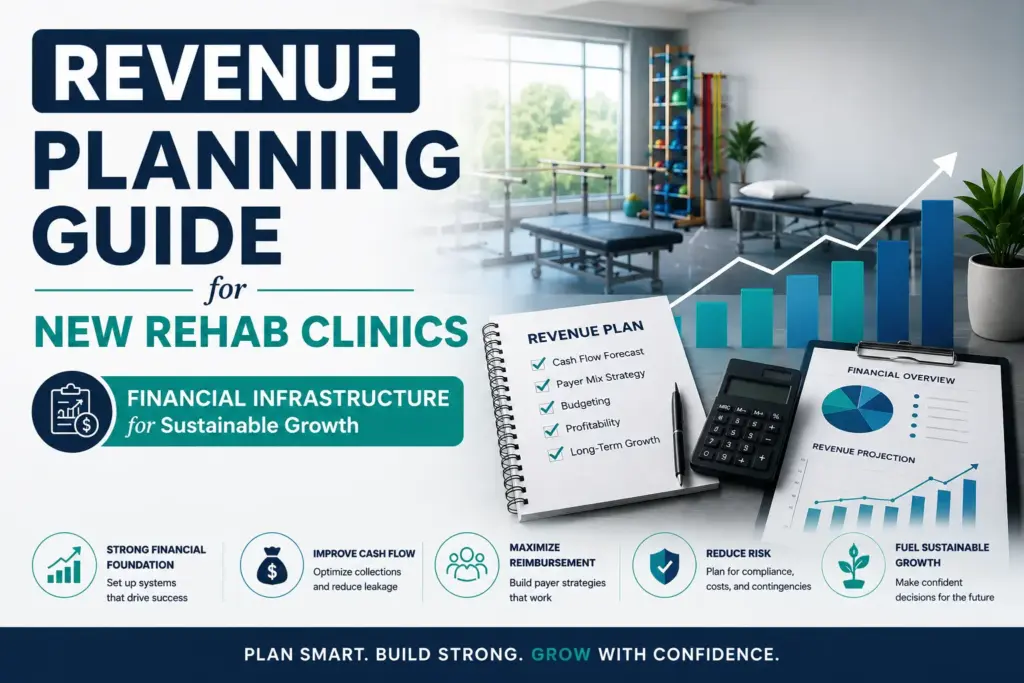
Revenue Planning Guide for New Rehab Clinics: Financial Infrastructure
Florida drug rehab billing breaks down in predictable ways. The transactional model that keeps a new treatment center running at low census stops working the moment the program grows. Here are the four places it fails, why Florida’s payer environment makes each failure more expensive, and what a billing operation built for scale actually looks like.
Why Transactional Billing Fails Growing Florida Drug and Alcohol Treatment Centers

Florida drug rehab billing breaks down in predictable ways. The transactional model that keeps a new treatment center running at low census stops working the moment the program grows. Here are the four places it fails, why Florida’s payer environment makes each failure more expensive, and what a billing operation built for scale actually looks like.
Behavioral Health Revenue Cycle Management in 2026: Where It Breaks and How to Fix It

Behavioral health billing guidelines can be complex for rehab clinics navigating payer rules, documentation standards, and compliance requirements. This guide breaks down key billing practices, common mistakes to avoid, and how stronger processes can reduce denials, improve reimbursement accuracy, and support healthier revenue cycles.
IOP Billing: Where Claims Break Down and How Clinics Fix It at Scale

IOP billing is often where behavioral health claims break down due to authorization gaps, documentation errors, coding issues, and payer-specific rules. This guide explores the most common causes of denials, where revenue leakage happens, and practical ways to improve claim accuracy and reimbursement speed.
Behavioral Health Billing Guidelines: What Every Rehab Clinic Needs to Know Before Admitting a Patient

Behavioral health billing for rehab clinics requires strict adherence to payer guidelines, accurate documentation, and compliant coding practices. From authorizations to claim submission, small mistakes can lead to denials and delays. Learn the essential billing guidelines that help rehab centers improve reimbursement and reduce revenue disruptions.
Insurance Verification Process in Behavioral Health – What Clinics Get Wrong and How to Fix It

Insurance verification in behavioral health is more than checking eligibility. A structured verification process helps prevent claim denials, delays, and reimbursement issues while improving patient access to care. Learn how accurate insurance verification supports smoother admissions, stronger cash flow, and fewer billing disruptions.
Behavioral Health Billing vs Medical Billing – Key Differences Providers Must Know

Behavioral health billing and medical billing may follow similar reimbursement frameworks, but the coding, authorization requirements, and claim complexities are very different. Learn the key distinctions, common challenges, and why specialized behavioral health billing processes are essential for cleaner claims and consistent revenue.
Medical Billing Services in Florida: What Practices Should Look For

Florida medical billing has its own complications: MMA managed care plans, heavy Medicare Advantage concentration, AHCA regulation, seasonal volume swings, and telehealth modifier complexity. Out-of-state billing companies often miss these. Here are the seven questions every Florida practice should ask before hiring a billing vendor, the red flags to avoid, and what good Florida billing actually looks like.