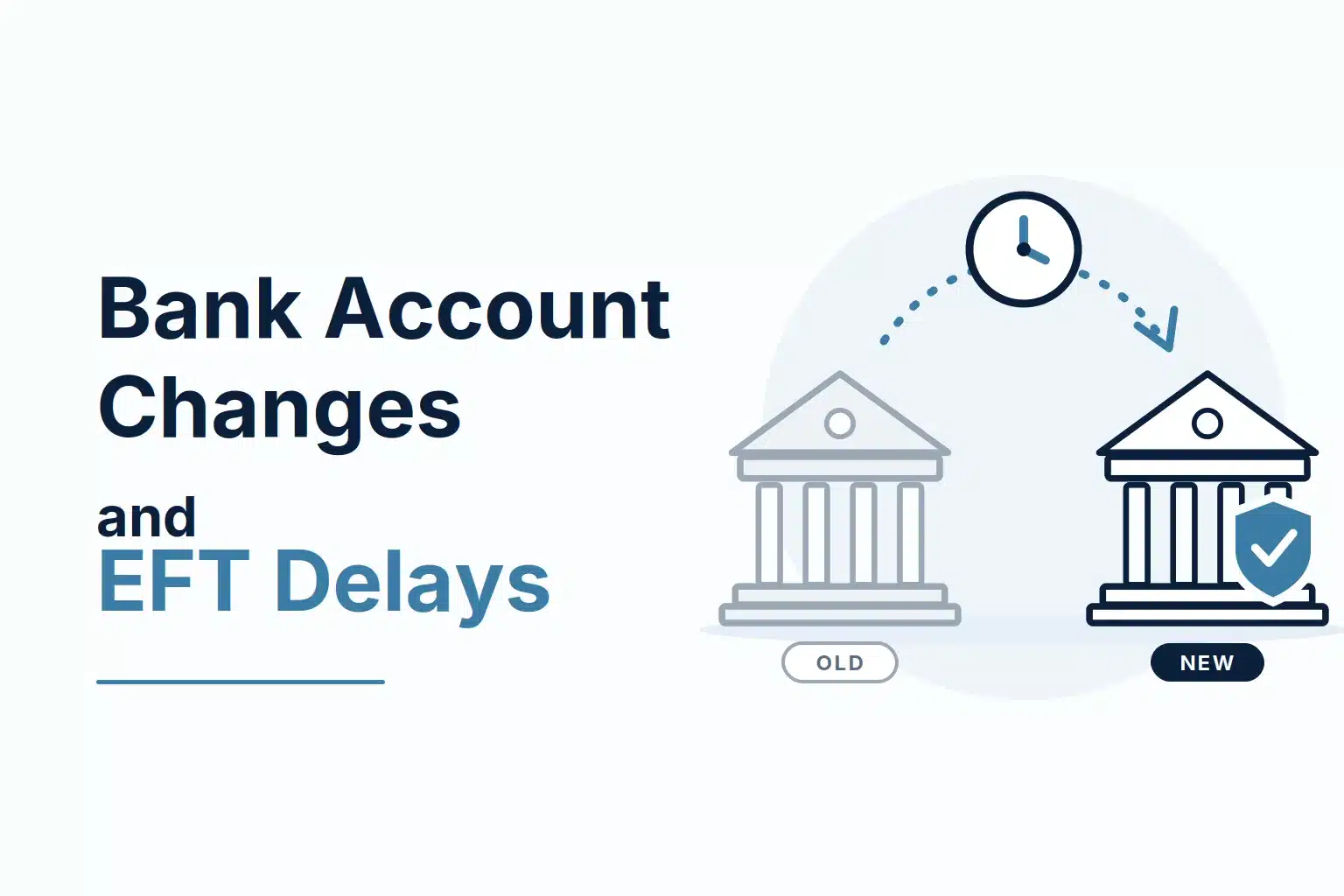
Key Takeaways: Changing your facility’s bank account triggers payer verification before a new EFT enrollment is approved, and payments can be held, or routed to the old account, while that verification runs. The delay comes from how the change is sequenced, not from anything being wrong at your facility.
- An account change request looks identical to a fraudulent account takeover at the moment it arrives, so payers verify both the same way.
- Multiple bank changes on the same Tax ID in a short window raise the level of scrutiny on every one that follows.
- Verification varies widely by payer: one may approve in days while another takes weeks and calls the owner directly.
- A payment already in the payer’s cycle can still process to the old account, so the old account must stay open until every payer confirms the new enrollment is active.
- Most of the delay is avoidable by notifying your billing partner early, having documentation ready, and monitoring both accounts through the transition.
Changing your facility’s bank account is sometimes unavoidable. A new bank, a closed account, a change in ownership, a treasury decision made three levels above the billing team.
What is less obvious is that the change can hold up your money, and that the reason has nothing to do with anything being wrong at your facility.
A single bank account change is routine. Multiple changes within a short window can trigger additional payer verification before a new electronic funds transfer (EFT) enrollment is approved, and that verification takes time. During this process, payments can be delayed, and depending on where a payment sits in the payer’s cycle, it may still process to the account you just closed.
Why payers scrutinize bank changes
Payers have substantially increased fraud and payment-security controls in recent years. EFT enrollment is one of the places that tightening is most visible, for a straightforward reason: the EFT enrollment record determines where money goes.
An account change request is a request to redirect payments to a different destination. From the payer’s position, that is exactly what a fraudulent account takeover looks like. So the controls that exist to catch the fraudulent version apply to the legitimate version too, because at the point the request arrives they are indistinguishable.
When a facility or Tax ID shows multiple recent bank changes, the pattern raises the sensitivity further. One change is a business decision. Several in quick succession looks like something worth checking.
None of this means anything is wrong with your facility. It means the request met a threshold that triggers verification.
What additional verification looks like
The specific requirements vary, and different payers treat this differently. Some are considerably more aggressive than others, and the same facility can have one account change processed in two days with one payer and take several weeks with another.
What the verification generally involves:
- Additional fraud or security review: The enrollment is reviewed before it is approved.
- Banking documentation: Commonly a voided check, a bank letter on letterhead, or account verification directly from the financial institution.
- Ownership documentation: Particularly where the change accompanies an ownership or entity change.
- Direct verification with the facility owner or an authorized representative: The payer calls or writes to someone at the facility rather than to the billing company.
- Delays in EFT enrollment approval: This is the mechanism by which everything above becomes a cash flow problem.
- Temporary payment delays: Payments can be held while the enrollment sits in review.
The direct verification step is the one that catches facilities off guard most often. A payer contacting the owner directly is not a sign of a problem. It is a standard control. But if the person being contacted does not know a bank change is in progress, or the contact information on file is out of date, the request stalls until someone responds.
What happens to payments during the transition
This is the part with the most immediate financial consequence, and the honest answer is that it depends on timing.
Processing times vary by payer. Depending on where a specific payment sits in a payer’s cycle when the change is submitted, it may be delayed while the new enrollment is verified, or it may process to your previous account.
That second possibility is the one worth planning around. If the old account has already been closed, a payment routed to it does not simply arrive late. It has to be traced, returned, and reissued, which adds weeks to a payment that was otherwise on schedule.
The practical implication is that the old account should stay open until the new enrollment is confirmed active with every payer, not until the change request is submitted. Those are different moments, and the gap between them is where payments get lost.

What we are seeing
Our Customer Success team has seen increased scrutiny around bank changes across several major payers in recent months. Some now require documentation or direct verification before approving a change that previously would have processed routinely.
The pattern is consistent enough to plan around: expect verification, expect it to take longer than the payer’s stated turnaround, and expect at least one payer in your mix to be materially slower than the others.
How to avoid the disruption
Most of the delay in a bank change is avoidable, and almost all of the avoidable portion comes down to sequencing.
- Tell your billing partner before you close the current account: Ideally before the change is finalized at all. The enrollment work can start in parallel rather than after the fact.
- Avoid unnecessary or repeated changes: Each one resets the sensitivity on your Tax ID. A facility that changes accounts twice in six months is treated differently from one that changes once.
- Have the documentation ready before it is requested: A voided check and a bank letter on letterhead cover most requirements, and having them prepared removes days from the process.
- Make sure the owner or authorized representative knows a change is in progress: When the payer calls to verify, someone needs to recognize the call and respond to it.
- Watch payment activity closely during the transition: On both the old and new accounts. This is the window where a missing payment is cheapest to catch.
- Say something immediately if an expected payment does not arrive: Tracing a misrouted payment gets harder with time, and some payers have windows on reissue requests.
How CodeMax handles it
Our Customer Success team works directly with payers to update EFT enrollment information and follows up whenever a payer requires additional verification. That includes assembling the documentation payers ask for, responding to verification requests, and tracking which enrollments have been confirmed active and which are still pending.
This is the part of revenue cycle work that does not fit neatly into software. A platform can tell you a payment did not arrive. Knowing which payer requires a bank letter versus a voided check, which one will call the owner directly, and which one needs a follow-up call on day ten is operational knowledge held by people who do it repeatedly across many facilities and many payers. It is also the reason billing and claims management and RCM software work better together than either does alone.
If you are planning a bank change, tell us as early as possible, ideally before the old account closes. We can flag the likely payer requirements in advance and keep the disruption to your payments as short as possible.
Final Thoughts
A bank account change is an ordinary business decision that has become an unusually consequential one, because payer fraud controls have tightened around exactly this transaction.
The change itself is not the problem. The sequencing is. Facilities that notify their billing partner before closing the old account, keep documentation ready, and monitor both accounts through the transition generally see a short delay. Facilities that close the old account first and notify afterward generally do not.
Planning a bank account change? Tell us before the old account closes and we will flag each payer’s likely requirements, manage the EFT re-enrollment, and track every payment through the transition. Call 866-263-3629 or email info@codemaxmb.com.
You can also speak to a specialist before your next account change.
Frequently Asked Questions
It can. Payers generally require verification before approving a new electronic funds transfer enrollment, and payments can be held while that verification is in process. A single change with advance notice usually produces a short delay. Multiple changes in a short window, or a change submitted without notice, typically produce longer ones.
Because redirecting payments to a new account is what a fraudulent account takeover looks like from the payer's side. The controls that exist to catch fraudulent requests apply to legitimate ones as well, since at the moment the request arrives the two are difficult to distinguish.
It varies considerably by payer, and this is an area where payers differ more than most. Some process changes in a few days. Others require documentation and direct verification with the facility owner and take substantially longer. Plan around the slowest payer in your mix rather than the average.
Commonly a voided check or a bank letter on institution letterhead confirming the account. Where the change accompanies an ownership change, ownership documentation is frequently requested as well. Some payers also verify directly with the facility owner or an authorized representative by phone or in writing.
Depending on where it sits in the payer's cycle, it may be held until the new enrollment is confirmed, or it may process to the previous account. This is why the old account should stay open until every payer has confirmed the new enrollment is active, rather than until the change was submitted.
No. Changes are sometimes unavoidable and a single well-sequenced change is routine. What creates problems is frequency and sequencing: repeated changes within a short window raise scrutiny on the Tax ID, and closing the old account before enrollments are confirmed creates the conditions for a payment to go missing.