Why Changing Your Bank Account Can Delay Your EFT Payments
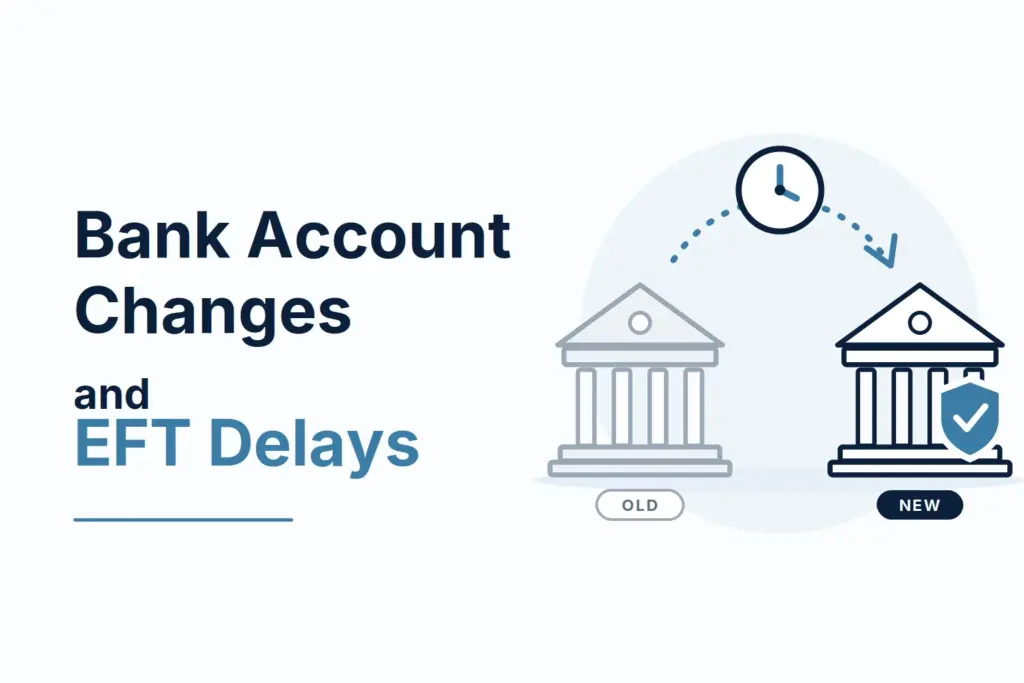
Key Takeaways: Changing your facility’s bank account triggers payer verification before a new EFT enrollment is approved, and payments can be held, or routed to the old account, while that verification runs. The delay comes from how the change is sequenced, not from anything being wrong at your facility. An account change request looks identical […]
Why Behavioral Health Collections Dip at Year-End (and How to Protect Your Q4 Revenue)
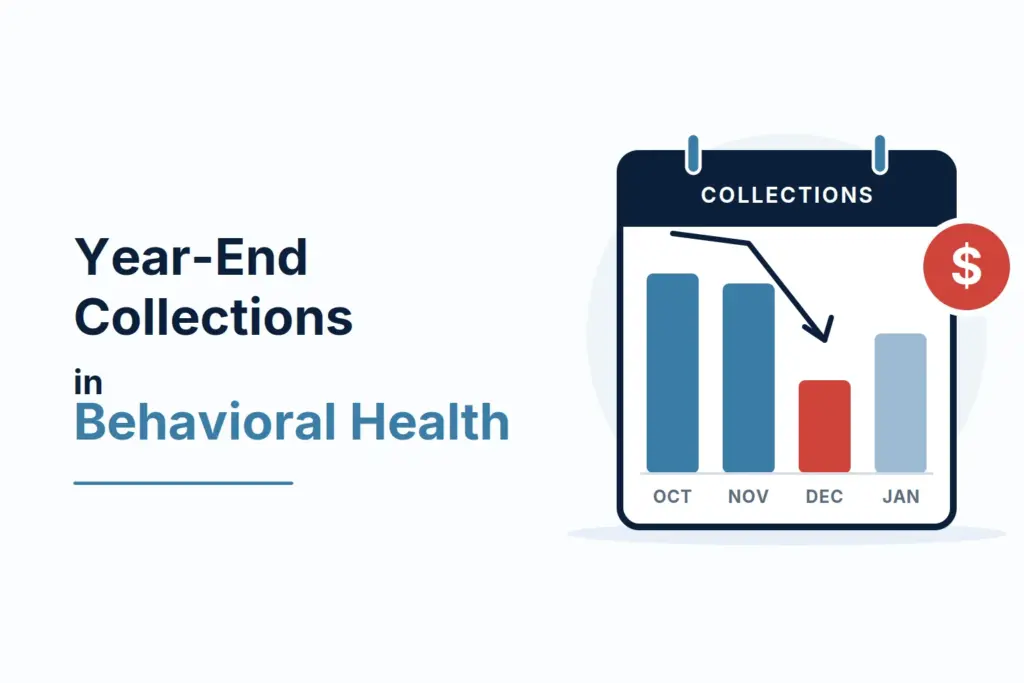
Key Takeaways: The year-end collections dip in behavioral health is predictable. Payer slowdowns, billing staff time off, tighter review, and timely filing deadlines all land in the same four to six weeks, and the work that protects Q4 revenue happens in October and November, not December. Payers run reduced staffing around the holidays, so claims, […]
Blue Cross Blue Shield Credentialing for Behavioral Health Providers
Key Takeaways: A behavioral health provider credentials with the Blue plan in the state where it delivers care, not with every plan whose members it treats. Out-of-state Blue members are billed through that local plan via BlueCard, but in-network payment depends on local participation, and the organization that owns the behavioral health network can change […]
Single Case Agreements in Behavioral Health – Negotiation, Enforcement, and Recovery
Key Takeaways: A single case agreement covers one admission or treatment episode at a negotiated rate. Signing it is roughly the halfway point, because a signed agreement does not guarantee the claim is adjudicated at the agreed rate. An SCA covers the episode it was written for, not the patient indefinitely, so a readmission requires […]
CARF Accreditation and Payer Denials: Why Accredited Facilities Still Get Downcoded
Key Takeaways: CARF accreditation proves a program is capable of delivering a level of care. It does not prove that an individual patient required that level of care on a given day, which is the only question a payer asks when adjudicating a claim. CARF accredits programs and service lines rather than organizations, on a […]
Why Complete Behavioral Health Notes Still Get Downcoded
Key Takeaways: Complete behavioral health notes still get downcoded because payers grade documentation against medical necessity criteria sets the facility cannot see and cannot confirm by asking. Payers apply ASAM, MCG, InterQual, or state-specific criteria, and the set being used is never printed on the denial. ASAM Fourth Edition adoption varies by state, with Washington […]
What Every Substance Use Rehab Facility Should Know About 42 CFR Part 2 and Protecting Patient Data
Key Takeaways: The 2024 Final Rule modernized 42 CFR Part 2 and aligned it with HIPAA. As of February 16, 2026, all Part 2 programs must comply, and OCR now administers and enforces both rules. Penalties run up to $2,190,294 per HIPAA violation and $1,538,970 per Part 2 violation OCR took over Part 2 enforcement […]
What Triggers a Payer Medical Record Audit in Behavioral Health
TL;DR: A payer medical record audit is a request from an insurer or Medicaid program to review the clinical documentation behind a paid or pending claim. In behavioral health, these requests have become more frequent in 2026 due to federal oversight initiatives, parity enforcement, and payer-side AI claims analysis, not necessarily because a clinic did […]
POS 10 vs. 02 – Getting Telehealth Billing Right in 2026
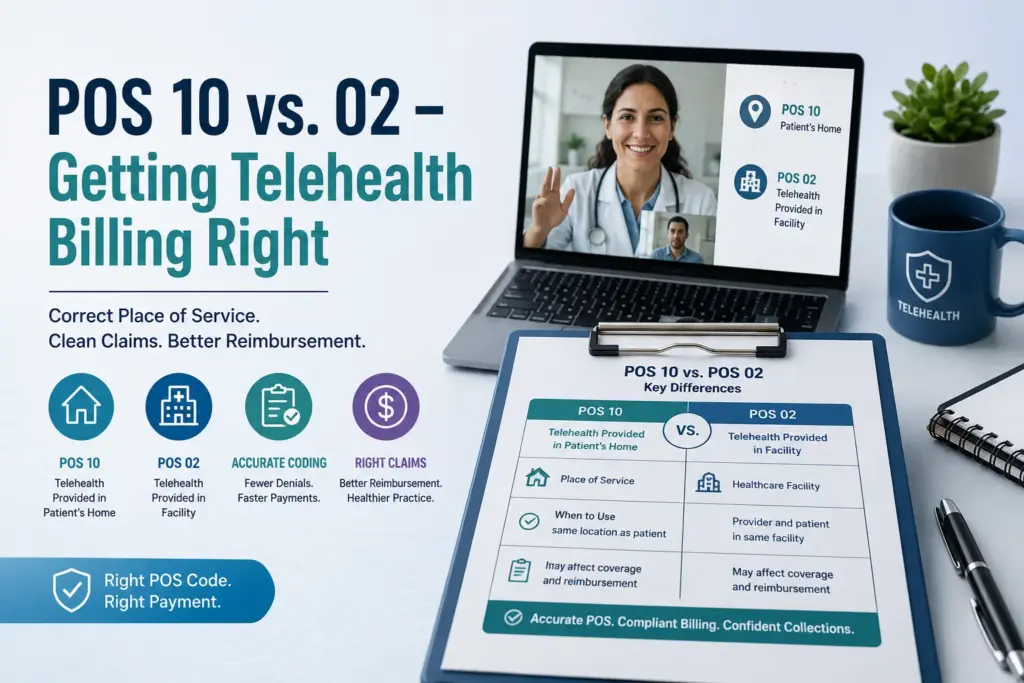
TL;DR: What POS 10 and POS 02 actually mean, and why the one-digit difference changes the reimbursement rate The CMS rule change that settled how POS 10 gets paid, and when it took effect Modifier 95 vs. 93 vs. GT, and why the modifier doesn’t set the payment rate, the POS code does The POS-modifier […]
Mental Health Billing Software – What to Look For in 2026
TL;DR: What “good” software needs to do now that denial rates and payer requirements have shifted The 8 core processes every behavioral health billing system should support Red flags that mean a current platform has outgrown a clinic, or was never built for it How to evaluate a vendor past the feature list, support, implementation, […]